

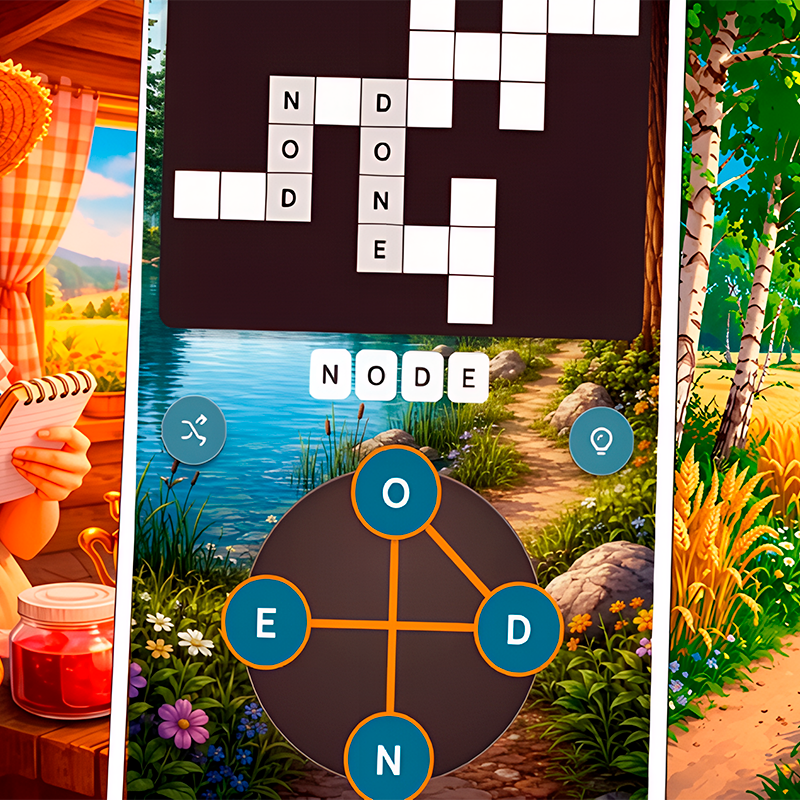



Puzzle Games focus on solving a defined problem rather than simply reacting quickly. A level may ask you to match tiles, move objects into position, complete a pattern, connect pieces, clear a board, or find the correct sequence of actions. The objective changes from game to game, but progress usually depends on understanding the rules and choosing moves that bring the puzzle closer to its solution.
How Puzzle Games Work
Most Puzzle Games present a board, layout, or set of interactive pieces with a specific goal. You might need to remove every matching tile, guide an object to an exit, arrange shapes without leaving gaps, combine numbered pieces, or activate mechanisms in the right order.
Some puzzles can be solved through trial and error, while others limit your moves, time, or available space. When a game restricts the number of actions you can take, each move becomes part of the solution rather than an isolated choice.
Controls and Basic Actions
Browser Puzzle Games are commonly played with the mouse or touchscreen. Depending on the puzzle, you may click or tap pieces, drag objects, swap positions, draw connections, or select an answer. Games that involve movement or character control may also use the keyboard.
Before making several moves in a row, identify what can and cannot be changed. Fixed obstacles, locked pieces, limited spaces, or one-way movement rules often determine which solutions are possible.
Solving Levels More Efficiently
Start by locating the part of the puzzle with the fewest available choices. A piece that can move in only one direction or a space that accepts only one shape can reveal the next step more clearly than an open section with many possibilities.
When moves affect several parts of the board, consider the consequence before committing. Clearing one group of tiles may change the position of the remaining pieces, while moving an object too early can block a route you need later. In puzzles with an undo option, use it to test uncertain sequences without restarting the entire level.
Different Types of Puzzle Games
The category includes matching puzzles, logic challenges, sliding puzzles, physics-based levels, number games, maze puzzles, sorting tasks, and spatial problems. Matching games usually revolve around recognizing groups or combinations, while logic and movement puzzles place more emphasis on planning the order of your actions.
Choose a style based on the kind of problem you want to solve: pattern-based puzzles reward visual recognition, spatial games depend on positioning, and logic puzzles require you to work through rules and consequences until only the correct solution remains.