


Play Mindblow online and solve creative picture-word puzzles by finding the hidden idea, choosing letters, earning coins, and using hints when stuck.
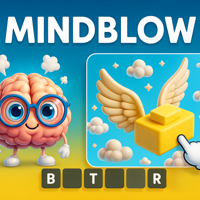
Here's a quick look at the game:
Mindblow is a visual word puzzle where each level gives you one carefully arranged image and asks you to discover the word hidden behind its idea. Instead of simply naming the objects you see, you need to interpret how they are combined, notice unusual details, and turn the visual joke or concept into the intended answer.
What Is Mindblow?
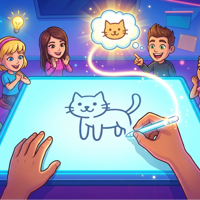
Mindblow is a single-player guessing game built around visual wordplay. Every puzzle presents an image that represents a particular word, phrase, object, action, or association. You study the scene, decide what the picture is trying to communicate, and enter the answer using the available letters.
The important difference is that Mindblow is not a standard "name this picture" quiz. The obvious object may only be one part of the clue. You often need to understand why two objects have been combined or why something in the image looks deliberately strange.
For example, the game uses visual combinations such as a worm inside a book to suggest bookworm. Another example combines a brick with the idea of running quickly to create a visual word joke pointing toward breakfast. These puzzles show the type of lateral thinking Mindblow expects from you.
Early levels can be understood quickly, while later puzzles require more attention to wording, associations, compound words, and visual puns.
How to Play Mindblow
The rules of Mindblow are easy to understand. The challenge comes from interpreting the pictures correctly.
Each level begins with an illustrated clue. Look at everything in the scene before deciding what the answer might be. Once you have an idea, use the letters provided by the game to construct the hidden word.
A correct answer completes the puzzle and lets you continue. Correct guesses also reward you with coins, which can help when a later Mindblow puzzle leaves you stuck.
Understand the Whole Image
Do not immediately type the name of the largest object on the screen.
A Mindblow image is usually designed around a concept rather than simple object recognition. If you see a book, for example, the answer is not necessarily "book." Look at what is inside it, what is happening to it, where it is placed, or what another object is doing nearby.
Ask yourself:
- Which parts of the image look deliberately unusual?
- Are two familiar objects being combined?
- Does the scene represent a common compound word?
- Could an action in the image be part of the answer?
- Is the puzzle using a visual pun?
The unusual part of the picture is often the strongest clue.
Turn Images Into Words
After identifying the important elements, describe them using simple vocabulary.
Suppose you see an object moving quickly. Possible words could include "fast," "speed," "run," or "race." If another part of the image suggests food, morning, or breaking something, start testing whether those ideas combine into a recognizable English word.
This translation from image → concept → word is the main Mindblow gameplay loop.
Check the Available Letters
The letter choices give you additional information.
If you have two possible solutions, compare them with the letters available on the screen. A missing letter can immediately rule out one guess, while an unusual letter may point toward a word you had not considered.
Do not treat the letter bank as something you use only after solving the puzzle. In harder Mindblow levels, it can be one of your best clues.
Enter the Answer
Select the letters in the correct order to form your answer. On desktop, you can interact with the interface using the mouse. On a touchscreen device, you can tap the letters directly.
If the answer is incorrect, reconsider your interpretation rather than repeatedly creating random words. Mindblow puzzles are designed around recognizable concepts, so understanding the image is normally faster than brute-forcing combinations.
Controls
Mindblow does not require movement keys, aiming, or complicated keyboard commands. Nearly everything is handled through clicking or tapping.
| Action | Control |
|---|---|
| Select a letter | Left click or tap |
| Build an answer | Select letters in order |
| Choose a menu option | Click or tap |
| Use a hint | Click or tap the hint option |
| Desktop input | Mouse |
| Mobile input | Touchscreen |
Because Mindblow uses simple pointer controls, you can concentrate on the puzzle immediately without learning a separate control scheme.
Coins and Hints
Solving Mindblow levels correctly earns coins. These coins act as a resource for situations where you cannot identify the hidden word.
Hints can give you assistance instead of requiring you to abandon a difficult puzzle. The exact hint options may vary between versions, but their purpose is to narrow the possible answer when the visual clue alone is not enough.
It is usually better to examine the image carefully before spending coins. If you use hints on every easy puzzle, you may have fewer resources available when Mindblow introduces a genuinely difficult visual connection.
A useful approach is to attempt several interpretations first. Check the letter choices, rethink the strange details, and only use a hint when you have stopped making progress.
Tips for Solving Mindblow Puzzles
1. Look for Something That Should Not Be There
The most important object is not always the biggest one.
Instead, search for the detail that makes the image unusual. A strange location, unexpected costume, exaggerated action, or impossible combination may contain the real clue.
Mindblow often relies on these deliberate visual contradictions.
2. Break Compound Words Into Pieces
Compound words are especially useful when interpreting visual riddles.
If a picture clearly contains two unrelated ideas, name each one separately and see whether the words can be combined. Think in terms of patterns such as:
- object + object
- action + object
- adjective + noun
- place + object
- body part + object
You are not guaranteed to get a compound word, but testing this approach can quickly reveal the logic behind many Mindblow puzzles.
3. Describe Actions, Not Just Objects
A picture of a person does not always represent "man," "woman," or "person." What the character is doing may matter much more.
Try verbs such as running, breaking, falling, holding, opening, flying, or sleeping. Then combine the action with other visible clues.
This is especially helpful when the objects themselves seem too ordinary to produce a useful answer.
4. Think About Sound and Wordplay
A visual clue may make sense because different words sound similar or because part of the picture represents one section of a longer word.
If a literal interpretation leads nowhere, say your possible answers aloud. Hearing the components can sometimes reveal the joke faster than staring at the picture.
Mindblow rewards flexible language rather than strict literal interpretation.
5. Use the Letter Bank to Test Your Theory
Once you have a possible answer, check every required letter.
If the answer needs two copies of one letter, make sure both are available. If an unusual letter such as V, K, or Y appears, think about words that could naturally include it.
This prevents you from spending too much time trying to force an answer that the puzzle cannot accept.
6. Do Not Overcomplicate an Easy Image
Lateral thinking is useful, but it can also lead you too far away from the intended solution.
Start with the simplest reasonable interpretation. Only search for complicated puns or distant associations when the obvious answers fail.
The difficulty in Mindblow comes from finding the specific connection the image designer intended, not from inventing the most elaborate possible explanation.
7. Return With Fresh Eyes
If a puzzle has stopped making sense, look away for a moment and reconsider it later.
Visual riddles can create mental fixation: once you decide an object means one thing, it becomes difficult to see another interpretation. Starting again without your original assumption can make the hidden word suddenly obvious.
How Mindblow Gets Harder
Mindblow begins with concepts that are relatively easy to recognize, helping you understand how the images communicate words.
Later puzzles can become harder because the visual connection is less literal. You may need to recognize an association rather than a visible object, identify an unusual interpretation of a familiar word, or combine several clues into one answer.
That progression is important because the controls never become more complicated. The challenge increases through interpretation, not additional buttons or systems.
As you improve, you start looking at each Mindblow picture differently. Instead of asking "What is this?" you begin asking "Why did the puzzle designer put these things together?"
That question is usually much more useful.
Can You Play Mindblow Online?
Yes. Mindblow has a browser version that can be played online without installing a separate program. Browser releases are available for desktop computers and compatible mobile devices, with interaction handled through clicks or touchscreen taps.
There is also a separate Mindblow: Guess the Word! mobile app available for iPhone, iPad, and Android.
The mobile version includes ads and optional in-app purchases. If you only want to try the basic visual guessing gameplay, the browser version provides a straightforward way to start playing without downloading an app.
Who Will Enjoy Mindblow?
Mindblow works best for players who enjoy picture riddles, word games, rebus-style puzzles, visual puns, and lateral-thinking challenges.
You do not need quick reflexes or complicated gaming experience. The main skills are observation and flexible thinking.
It can also appeal to players who like solving one puzzle at a time. A single Mindblow level can take only a few seconds when you immediately understand the image, while a cleverer clue may keep you thinking considerably longer.
English vocabulary helps because many solutions depend on word combinations and associations. However, the pictures give you enough context to make the game more visual than a traditional crossword or text-heavy vocabulary quiz.
Why Mindblow Is Easy to Pick Up
The strongest part of Mindblow is the simplicity of its basic question: What word does this picture mean?
There are no lengthy instructions between you and the puzzle. You see an image, examine the visual clue, test a word, and continue when you are correct.
At the same time, the image-based format allows the puzzles to change significantly without changing the rules. One level may rely on a compound word, another on an action, and another on a less obvious association.
That combination makes Mindblow suitable for short sessions while still giving you puzzles that can require real thought.
FAQ
What is Mindblow?
Mindblow is a visual word-guessing game where you examine an image and identify the word or concept hidden inside it.
How do you play Mindblow?
Study the image, determine what idea it represents, and select the available letters in the correct order to form the answer.
Can I play Mindblow online?
Yes. A browser version of Mindblow can be played online on desktop and compatible mobile browsers.
Is Mindblow available on mobile?
Yes. Mindblow: Guess the Word! is available as a mobile app, and browser versions also support touchscreen play on compatible devices.
What are coins used for in Mindblow?
You earn coins from correct answers and can use them for help when you become stuck on a puzzle.
What should I do if I cannot solve a Mindblow level?
Focus on unusual details, describe both objects and actions, test compound words, check the available letters, and use a hint if you still cannot identify the answer.